
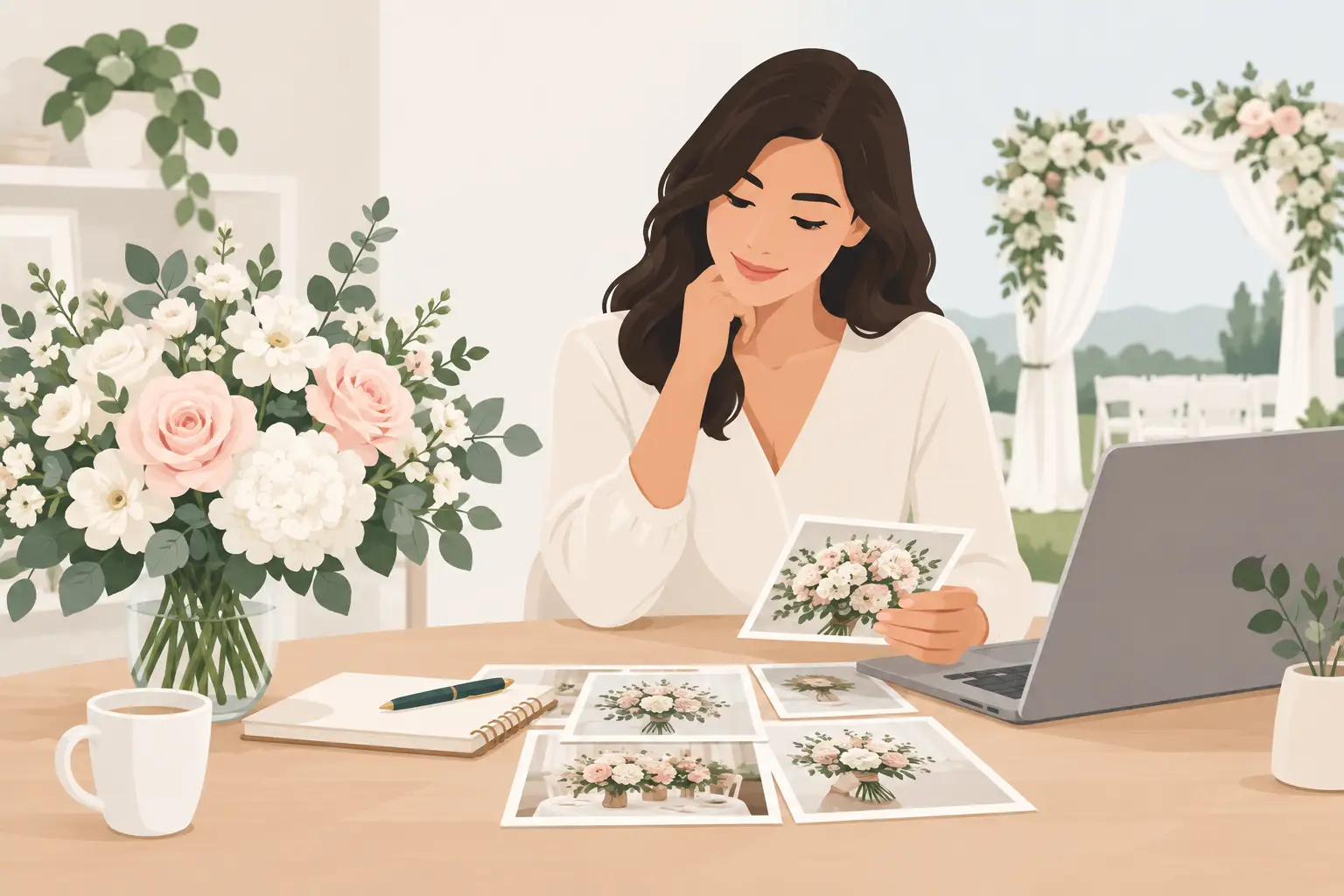
A wedding morning is full of small, memorable details: the scent of a bouquet as it is lifted from a vase, flowers waiting on the end of the aisle, a buttonhole pinned carefully into place. Knowing how to book wedding flowers early and thoughtfully gives those details room to feel like part of your day, rather than another decision to make at the last minute.
Flowers do not need to be chosen before you have every table plan and ribbon decided. They do, however, benefit from an early conversation with a florist whose work you genuinely connect with. The best wedding flowers are not copied from a photograph. They are shaped around your venue, the season, your priorities and the feeling you would like your guests to take away.
When to book wedding flowers
For a Derbyshire wedding, it is sensible to begin looking for a florist around 12 to 18 months before the date, particularly if you are marrying on a summer Saturday or during a popular autumn weekend. Independent florists take on a limited number of weddings so that each one receives proper attention, and dates can be reserved well in advance.
If your wedding is closer than this, do still ask. A smaller celebration, a weekday wedding or a date outside peak season may be possible. A flexible approach to flower varieties can also make a real difference. What matters most is finding out early whether your preferred florist is available, then allowing enough time for the design to develop naturally.
You do not need a final guest count before making contact. Your date, venue and a broad sense of what you need are enough for an initial enquiry. Once you have confirmed your florist, the finer details can be adjusted as plans settle.
How to book wedding flowers with the right florist
Start with the work itself. Look beyond one or two striking photographs and consider whether a florist’s designs have a consistency that feels right for you. Perhaps you are drawn to gathered, garden-like flowers with movement, or to a more restrained arrangement with a limited palette. Notice the texture, the colour combinations and whether the flowers feel at home in the settings shown.
It is also worth considering the way a florist works. If seasonal British flowers, low-waste methods and personal guidance matter to you, choose someone who speaks clearly about those values. There is a meaningful difference between ordering a standard package and commissioning flowers designed for your particular setting.
At Sweetpea Macfie, wedding work begins with a conversation rather than a fixed menu. That allows the flowers to respond to the people, place and time of year involved – whether that is a relaxed village celebration, a country house gathering or a small ceremony with just a few carefully chosen arrangements.
When you enquire, share the practical foundations: your wedding date, ceremony and reception venues, approximate guest numbers and the elements you are considering. It is helpful to mention bouquets, buttonholes, ceremony flowers, table arrangements and any floral details for a cake, welcome sign or bar. You do not need to know the answer to everything. A good florist will help you work out what will have the greatest visual and emotional impact.
Bring references, but leave room for interpretation
A small collection of images is useful for communicating atmosphere. Rather than seeking an exact replica of a bouquet photographed in another country or season, look for the qualities you love: soft apricot tones, trailing foliage, sculptural stems, wildflower looseness or abundant texture.
This gives your florist something much more useful than a long list of specific blooms. It also leaves room for the best flowers available at the time. Seasonality is not a compromise when it is considered from the outset. It is often the reason the finished work feels alive, generous and true to the day.
Set a budget around what matters most
Flower budgets can feel difficult because every wedding is different. The cost depends on scale, flower choices, venue logistics, installation time, vessels, mechanics and the number of people involved in creating and setting up the designs. A large arrangement in an awkward location may require more planning than several smaller pieces.
The clearest place to begin is with your priorities. For some couples, the bridal bouquet and ceremony backdrop are the heart of the flowers. Others would rather create a warm, flower-filled atmosphere around the wedding breakfast. Neither approach is more correct.
Be open about the budget you are working with. It is not a limitation a florist should judge; it is information that helps them design intelligently. They may suggest concentrating the flowers in two or three memorable areas, choosing naturally plentiful seasonal stems, or repurposing ceremony arrangements at the reception where practical.
Trying to make every corner of a venue floral can dilute the effect. A beautifully made bouquet, an entrance arrangement and tables with characterful seasonal flowers can say far more than lots of small, disconnected decorations.
What to prepare for your consultation
You only need enough information to start a useful conversation. Before your consultation, gather the following details if you have them:
- your date, venues and key timings
- an approximate guest count and table layout
- photographs of the spaces, especially the ceremony area and dining room
- inspiration images, fabric swatches or a sense of your colour palette
- a realistic budget range and the floral moments that matter most to you
Venue photographs are particularly valuable. Light, ceiling height, fireplaces, mantelpieces, doorways and table shapes all influence what will work well. A long refectory table asks for a different approach from individual round tables, while a barn may need flowers that feel intimate rather than lost in the scale of the room.
Tell your florist about details that could affect the design. This might include a church ceremony followed by a reception elsewhere, a registrar’s rules, candles supplied by the venue, delicate antique furniture, a cake maker’s requirements or family flowers you would like to acknowledge. There is no need to make these details complicated. They simply help create a plan that is both beautiful and workable.
Trust the season, especially in Derbyshire
British-grown flowers bring a particular freshness and character to wedding work. Spring may offer scented narcissi, tulips, ranunculus, blossoming branches and early garden foliage. Summer is generous with sweet peas, cosmos, roses, dahlias and herbs. Autumn brings rich seed heads, berries, grasses and changing foliage, while winter can be quietly elegant with evergreens, branches and textural ingredients.
Specific varieties cannot always be guaranteed. Weather, growing conditions and market availability are part of working with natural materials. A florist may propose a palette and style rather than promising every stem months ahead. This is a thoughtful way of planning, not an uncertain one. It makes space for flowers at their best, rather than forcing a design around imported blooms that are out of season.
If you have a flower you especially love, mention it. Your florist can tell you whether it is likely to be available and suggest suitable alternatives if needed. The aim is to preserve the feeling you had in mind, even if the exact variety changes.
Confirm the practical details without losing the magic
Once the design direction and estimate feel right, your florist will normally confirm the booking with written details and a booking payment. Read through the proposal carefully. It should make clear what is included, from delivery and set-up to hired vessels, installation arrangements and collection after the wedding.
Final numbers and timings are often confirmed nearer the date. This is when you can refine buttonhole quantities, table plans and any changes to the running order. Keep your florist informed if your venue or ceremony time changes, as access and set-up windows can be as important as the flowers themselves.
It is also sensible to ask who will be the point of contact on the day. You should not be answering questions about urns or candles while having your hair done. A planner, venue coordinator, trusted family member or member of the wedding party can handle practical queries, leaving you free to enjoy the morning.
Wedding flowers are at their most meaningful when they feel like they belong only to your celebration: shaped by the season, made with care and placed where people will truly notice them. Book the conversation early, share what matters, and allow the flowers to become one of the calmest, loveliest parts of the planning.
 I’m Marie,
the florist behind Sweet Pea Macfie.
I began Sweet Pea Macfie in 2018 and am a qualified florist with over 13 years’ experience.
The name is an ode to my Grandad, John Macfie, who in his day was one of the best Sweet pea growers in the country. He exhibited at all the major flower shows, and his Chelsea Gold Medal is one of my most treasured possessions, so you could say that growing and arranging flowers is in my blood.
I’m Marie,
the florist behind Sweet Pea Macfie.
I began Sweet Pea Macfie in 2018 and am a qualified florist with over 13 years’ experience.
The name is an ode to my Grandad, John Macfie, who in his day was one of the best Sweet pea growers in the country. He exhibited at all the major flower shows, and his Chelsea Gold Medal is one of my most treasured possessions, so you could say that growing and arranging flowers is in my blood.